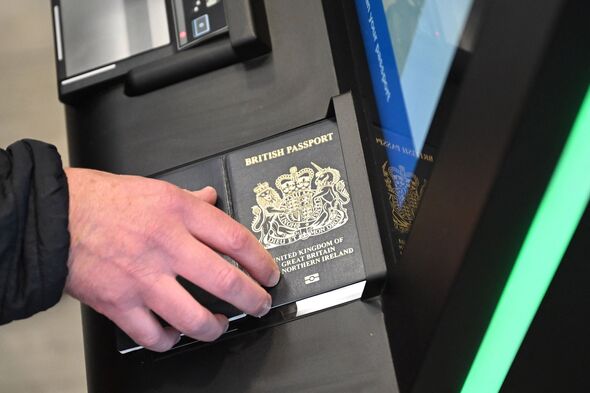

I recently returned from my first trip abroad of the year, several months after the EU’s Entry/Exit System came into force. My first experience of it was incredibly smooth, having added only mere minutes onto my exit from Vienna Airport last December.
The new border checks trickled in across the continent since then and the experience for fellow UK and non-EU travellers have varied greatly. From EES kiosks not up and running, to empty lines, and hour-long queues, the new border checks have wreaked havoc for some - but not others. Knowing there could’ve been a possibility of extensive idling, my mum was adamant that we arrive at Palermo Airport with enough time to spare.

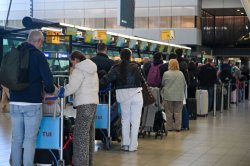
It turns out… there was no need. By the time we arrived for our 7.50pm flight at just after 4pm, there was no queue in sight at passport control. We idled, buying snacks in duty free and filling and refilling water bottles until we decided to bite the bullet.
A total of nine people stood in front of us, with the EES machines not in use and one border control booth open. The whole experience was painless, even if I did scoff and roll my eyes at our luck a few times before passing through to the gate.
It was typical, truly typical. I don’t know what I was expecting, but I didn’t think it would be so easy. However, the experience definitely was a positive one for my mum.
Her anxiety came from a real place, mind you. In May, my mum and dad spent a week in Porto and Lisbon. Their journey into the country was marginally delayed, waiting for an hour to get through passport control, despite there being no EES up and running. The calamity came at the end of their holiday, however.
As the daughter of very Type A parents when it comes to overseas travel, we always arrived at airports with enough buffer time. Due to all of the furore surrounding the EES, especially in Portugal, they arrived at Lisbon Airport a whole three hours before their flight.

With only hand luggage in tow, they were swiftly through to departures without a hitch. It was through EES and passport control that all hell broke loose.
With minimal booths open for EES and passport control, Mum and Dad found themselves waiting for over an hour and a half in the queue. Despite the overwhelming number of passengers waiting to get through, only two booths were open to check the documents.
Mum described the experience as frustrating and, as time went on, increasingly volatile. Mum and Dad arrived at their gate 20 minutes before it closed.
She was in no doubt that a number of people who formed the crowded queue missed their flights. Unfortunately, similar stories have happened across the continent.
Despite Palermo being the capital of Sicily, the airport is significantly smaller than what you’d find in Rome or Milan, with just one terminal. I expected some queuing, but our preparedness paid off far more than anticipated.
It was typical, really. This time, instead of spending hours in the queue, we spent aimlessly wandering the minute terminal before we decided to spend our wait sitting in front of our gate.

There didn’t seem to be any clear rhyme or reason as to how we got so lucky, and I’m sure we’ll never know. We reached out to travel experts to see whether British travellers flying in via smaller airports have a better chance of navigating the checkpoints.
This is what they said…
Jane Bolton, travel expert from tailor-made ski holiday specialist Erna Low, told DailyExpress.co.uk: “Whilst queues should always be expected during peak travel times, airports are experiencing their first summer season with the new Entry/Exit System and therefore holidaymakers should prepare for longer delays.
“Popular European destinations like Spain, Portugal and Italy are among the major hubs seeing the biggest impact, particularly for passengers registering biometric details for the first time.
“Peak travel times, including early mornings and weekends, are likely to see the longest queues with an influx of passengers.”
Alex Dyer, managing director of Lapland Famille, explained: “In my experience there's a real pattern to it. The longest EES queues have been at the big long-haul airports like Paris CDG and Schiphol, simply because far more people are pushing through them at once. Smaller airports, somewhere like Palermo, Bari or Trieste, have fewer arrivals, so the queues are usually shorter. It's not guaranteed though.
“A lot comes down to the time of day and whether that country is pausing its checks, so even a quiet airport can have a bad morning. The other big factor is school holidays. From my experience that period gets extremely busy and changes things dramatically, whereas outside it the airports are a lot quieter.”
Rachel Pennycook, Europe Travel Specialist at The Luxury Holiday Company said: “There isn’t really a one-size-fits-all answer. A smaller airport can feel much quicker because there are fewer flights, fewer passengers moving through at once, and often a more straightforward journey from arrival to border control. If an airport only has a handful of UK or long-haul arrivals landing at the same time, travellers may find the process feels calmer and less congested than at a major hub.
“There is also something to be said for the overall airport experience. Smaller regional airports can be easier to navigate, with shorter walking distances, fewer terminals and less competition for staff attention if there is disruption. For nervous travellers, families or anyone with a tight onward transfer, that simpler layout can make a real difference.
“However, that does not automatically mean smaller airports will be better equipped for EES. In some cases, a larger airport may cope more smoothly because it has more border staff, more biometric kiosks, and more experience handling high volumes of non-EU travellers. Queue times are likely to depend on a combination of factors, including how many UK flights arrive or depart at the same time, how many first-time EES registrations are being processed, staffing levels, and whether the airport has enough working scanners or kiosks open at that particular point in the day.
“Palermo is a good example of why experiences can vary so much. One traveller may pass through with barely any wait, while another travelling through a different airport, or even the same airport at a busier time, may face a much longer queue. Rather than choosing an airport purely because it is smaller, I would look at the whole journey: flight timings, connections, transfer distance, the day of travel, and whether you are travelling during a school holiday or weekend peak.
“For many holidaymakers, the best option will still be the route that gives them the most breathing room. A slightly less convenient flight time, a longer connection, or travelling outside the busiest weekend windows could make more difference than simply swapping a major airport for a regional one.”
Jane shared some helpful advice for UK travellers heading to the EU this summer. These include: