
A post-Brexit agreement on Gibraltar has triggered a political row, with opposition MPs warning that the deal could raise wider concerns about Britain’s ability to defend its overseas territories.
Ministers signed the agreement in Brussels today, with Foreign Office minister Stephen Doughty joining EU Brexit point man Maroš Šefcovic and Spanish foreign minister José Manuel Albares Bueno for the ceremony.
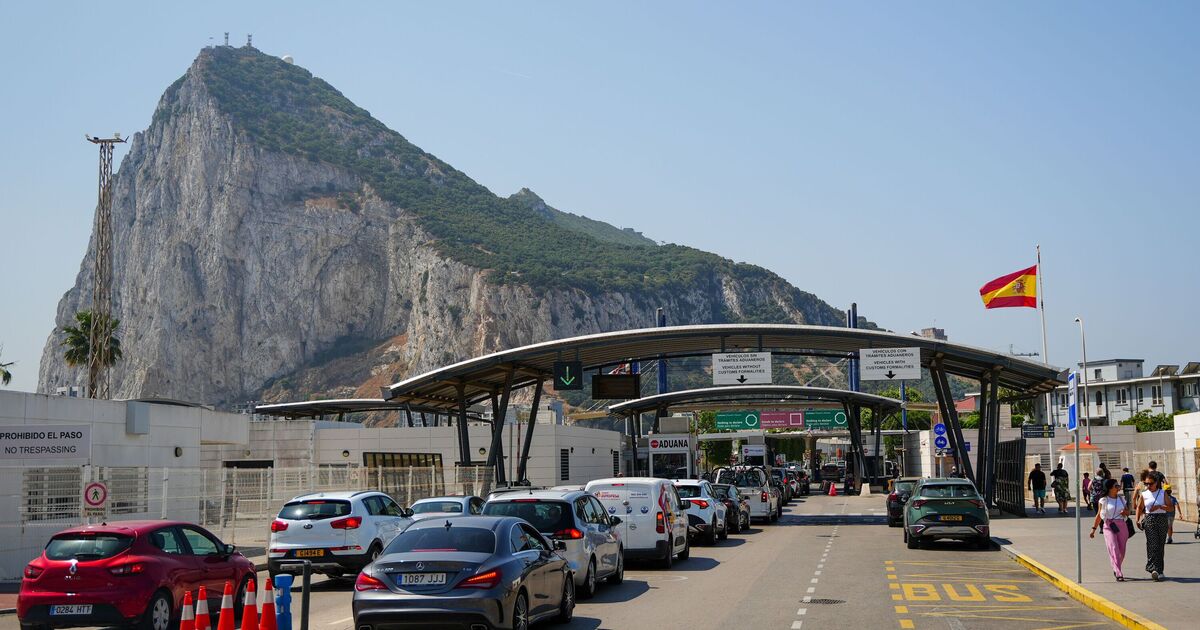
The deal will remove the existing border arrangements between Gibraltar and Spain and bring the British Overseas Territory into the EU’s Schengen free movement zone.
Gibraltar will remain British territory, but the new system means visitors will face Schengen border checks when entering the area. Britons travelling to Gibraltar will have to show passports, with Spanish guards having the final say on who can enter the Rock and, by extension, the wider Schengen area.
The arrangement has prompted accusations from opponents that the Government has weakened Britain’s position on sovereignty.
Reform MP Robert Jenrick said: “This Government has proven itself completely incapable of defending our national interest.
“They fold easier than a deckchair. Why are Brits being made to show their passport to Spaniards to enter British territory?
“Reform UK and Nigel Farage will finally put our country first.”
Reform MP Andrew Rosindell also criticised the agreement, saying Gibraltar’s status as a British territory should not be compromised.
He said: “Having betrayed Britain's sovereignty over the Chagos Islands, this Government has now turned its back on Gibraltar.
“Requiring Britons to face Spanish involvement when entering British territory is an unacceptable concession.
“Gibraltar has been British since the 1713 Treaty of Utrecht and must remain so. If ministers are prepared to compromise Gibraltar today, which British Overseas Territory will they put at risk tomorrow?”
The new treaty will come into force overnight and removes 118-year-old border infrastructure from the frontier with Spain, reports the Daily Mail.
The move makes Gibraltar effectively part of the EU’s Schengen zone for travel purposes, although it does not formally become part of the European Union.
The territory sits at one of the world’s busiest maritime choke points and is strategically important militarily because of its location.
Before Brexit, border checks between Spain and Gibraltar were required because the UK was not part of the Schengen system. Since leaving the EU, Madrid has pushed for the border to be moved back to ports in Gibraltar and for the frontier controls to be abolished.
One of the most controversial elements of the deal is that Britons will have to show passports to Spanish officials when entering a British territory that Madrid has long claimed sovereignty over and describes as a colony.
Supporters of the agreement argue it will make daily travel easier for thousands of people who cross the border each day.
Gibraltar Chief Minister Fabian Picardo has backed the agreement and attended the signing ceremony.
Spanish Prime Minister Pedro Sánchez welcomed the changes, describing them as bringing down “the last wall” inside the EU.
The agreement is expected to benefit people who cross the border daily, including around 15,500 workers from Spain who rely on access to Gibraltar for employment.
Gibraltar covers just under seven square kilometres and has one of the highest per capita incomes in the world, with an economy built around financial services and online gaming.
The dispute over Gibraltar dates back more than 300 years, after the territory was ceded to Britain under the 1713 Treaty of Utrecht. Spain continues to claim sovereignty over Gibraltar, while the UK maintains that its future should be determined by its residents.
Shadow Armed Forces Minister Mark Francois linked the Gibraltar deal to wider concerns about Britain’s overseas territories, including the Chagos Islands and the Falkland Islands.
He said: “It's a fitting end to Starmer's Government that it concludes with even further weakening of our sovereign borders.
“Once Labour showed weakness over Chagos, other nations smelt opportunity - and we are now under pressure over the sovereign base areas in Cyprus and Argentina, which is reviving its false claim to the Falklands.”
Former Tory Brexit minister David Jones, who has since joined Reform, also attacked the agreement.
He said: “It's an outrageous, pathetic surrender by the British Government.
“Both this government and the previous Conservative administration have been weak and spineless.
“It is another unforced surrender and the British people will not forget it at the next general election.”
Former Defence Secretary Sir Gavin Williamson added: “The government seems intent on giving everything away. First Chagos, next Gibraltar.
“They seem to have little care for Britain's strategic interests or the people that live there.”
The controversy comes after the Government’s agreement to transfer sovereignty of the Chagos Islands to Mauritius while retaining access to the Diego Garcia military base through a 99-year lease.
The deal would see Britain hand over control of the islands while continuing to operate the strategically important US-UK base. The arrangement has been reported to involve a cost of around £35 billion.
The agreement has faced criticism from US President Donald Trump, while opponents have warned that other British overseas territories could face pressure in future.
There have also been concerns among critics that PM-in-waiting Andy Burnham could seek to revive the Chagos deal.
Argentina has renewed its claim to the Falkland Islands ahead of an England World Cup semi-final, insisting the islands belong to Argentina.
Sir Keir Starmer recently criticised comments from Argentine foreign minister Pablo Quirno, who described Falkland Islanders as an “artificially implanted” population.
While the Prime Minister has rejected Argentina’s claims, opponents have warned that any perceived weakening of Britain’s position on overseas territories could encourage further challenges.
The Gibraltar agreement has therefore intensified a wider political debate about how Britain protects its overseas territories and strategic interests around the world.