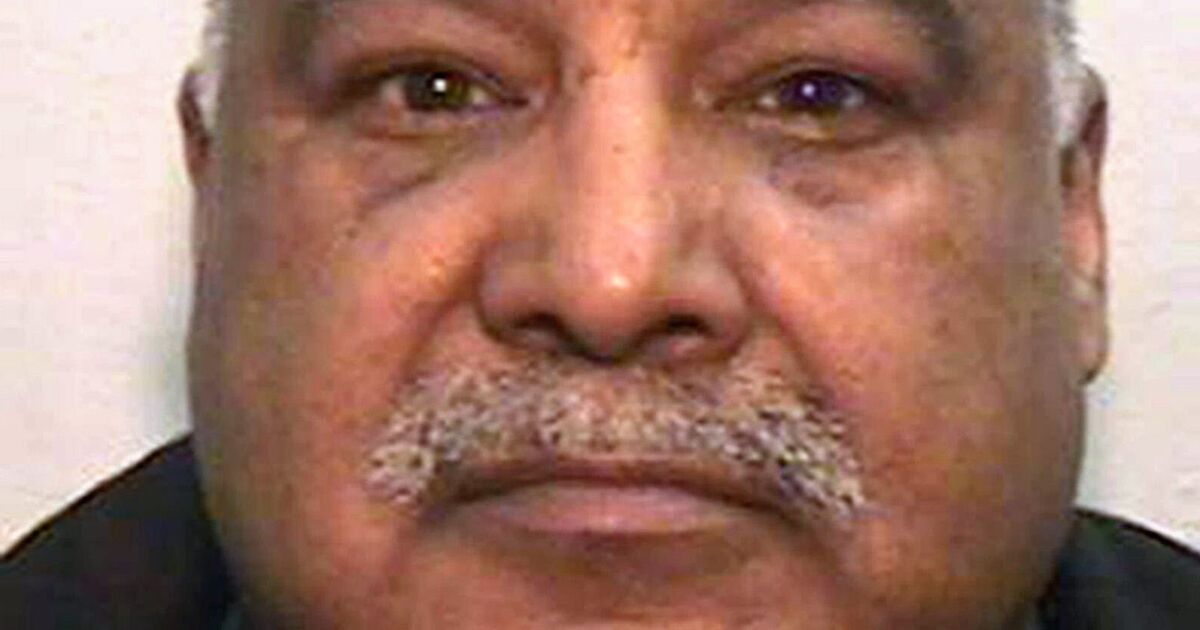

A diplomatic row has emerged over efforts to deport Rochdale grooming gang ringleader Shabir Ahmed after Pakistan indicated it wants Britain to address its own extradition requests before any agreement is reached.
The 73-year-old child rapist was released from prison last week after serving 14 years of a 22-year sentence for 30 child rape offences. Although he has been stripped of his British citizenship, Ahmed remains in the UK because legal and diplomatic barriers have so far prevented his deportation.
While ministers continue examining ways to change British law to facilitate his removal, Pakistan has made clear it also expects the UK to respond to long-standing concerns over political figures living in Britain.
A senior Pakistani government official told The Telegraph that Islamabad would not accept what it described as pressure or "arm-twisting" over Ahmed's case, insisting both countries' priorities must be treated equally.
Current UK legislation protects certain Commonwealth citizens who arrived in Britain before 1973 and have lived in the country for at least five years, creating one obstacle to Ahmed's removal.
A second challenge remains Pakistan's refusal to accept Ahmed, who it says is no longer one of its citizens after he allegedly renounced his Pakistani nationality. Two other convicted Rochdale grooming gang members are also caught up in the dispute.
Despite that, the official indicated Pakistan remained willing to negotiate, saying the government was prepared to think "out of the box" and "beyond normal procedures" if discussions progressed.
According to The Telegraph, Pakistani officials have repeatedly raised concerns about political activists and dissidents based in Britain.
Among them are London-based political figure Altaf Hussain, whom Pakistan has sought to extradite for years, along with former minister Shahzad Akbar and journalist and former military officer Adil Raja, who are both the subject of more recent extradition requests.
"There are people using British soil to destabilise Pakistan, in violation of several British laws, but the UK has done absolutely nothing about them," the official said.
"The UK tells us these miscreants are law-abiding and following UK law. They tell us they have to protect their human rights and free speech. We have shared evidence that they incite hatred, violence and social unrest, but the UK does not listen to us. Why double standards?"
The official suggested discussions over Ahmed's future had been taking place for many months before his release from prison.
"Our position is that they [the UK] must listen to us too. Both sides need to apply standards. Pakistan cannot be railroaded into agreeing to terms and conditions that are suitable only to the UK," the official said.
"The UK knows what our demands are. We have made our demands and concerns categorically clear to the UK. Some people in the UK are only playing media games. They are not being honest."
The official also alleged Britain had threatened visa restrictions and reductions in overseas aid if Pakistan continued to resist Ahmed's return.
"These demands are being made about somebody who is now around 75 and who has spent more than 60 years in your country. How is he our national when he is actually not our national? This is arrogance and a colonial mindset. It is unacceptable to us," the official said.
"We have systems and laws, and the UK Government, as well as politicians, must respect our legal position and the issues that matter to us."
Pakistan has previously accepted the return of some convicted grooming gang offenders, including Hamid Safi and Mohammed Sajid, but the official suggested expectations from Britain had since increased.
"It is a different Pakistan you are dealing with. Arrogance is not acceptable to us. We do not believe in arm-twisting, and the policy of arm-twisting is not going to yield any results.
"The Pakistan you are dealing with now is not the Pakistan you dealt with a few years ago. It is a very different kind of government, one that will not be blackmailed."
Meanwhile, the UK Government continues to explore options to remove Ahmed from Britain.
Ministers have not ruled out emergency legislation to amend the Immigration Act 1971, while visa sanctions against Pakistan remain under consideration, although they are understood to be a measure of last resort if diplomatic efforts fail.

48 PerFlyer