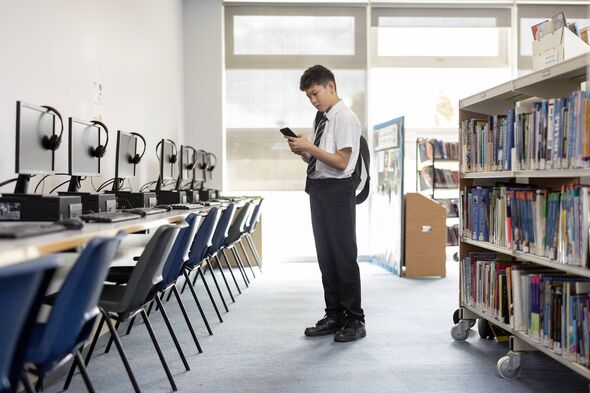

Starting on Monday, June 29, 2026, England's education system will see a landmark shift under sweeping new government legislation. The Children's Wellbeing and Schools Act 2026 will come into force, requiring all state-funded schools to establish a completely phone-free environment throughout the school day.
For some time, the Department for Education has advised schools to place restrictions on mobile device usage. While a considerable number of schools had already begun implementing such measures — with approximately 90% of secondary schools enforcing their own bans — the new Act enshrines these rules into national law.
The prohibition on phones during school hours is intended to reduce classroom disruptions and foster a safer environment by addressing concerns about cyberbullying and social media pressures.
Pupils will be prohibited from using or accessing mobile phones, smartwatches capable of receiving notifications, or similar smart devices at any point throughout the school day. This so-called 'bell-to-bell' restriction applies from the moment a student sets foot on school premises until the final bell sounds at the close of the day.
Schools will permit older pupils in Years 12 and 13 to access their phones in designated areas, such as a sixth-form common room. However, this exception will only apply provided they are not using their devices in the presence of younger students, reports the Mirror.
The new legislation will empower headteachers to decide which enforcement method is most suitable for their individual school. Some may opt for an outright ban on the premises, requiring pupils to surrender their devices at registration, while others may insist that phones remain switched off and concealed within bags for the entirety of the school day.

To guarantee compliance, Ofsted inspectors will formally assess schools to confirm that a clear, active mobile phone policy is in place. The law does not, however, prevent pupils from carrying a phone for safety purposes during their journey to and from school.
Certain exemptions are protected under the legislation, including for pupils who rely on mobile applications to manage long-term health conditions such as diabetes. These students will be able to use their essential medical technology throughout the day.
While the change is nationwide, it applies solely to England. Schools in Scotland, Wales, and Northern Ireland will continue to operate under their own distinct regional frameworks and guidelines.
Recently, it was announced that social media will be prohibited for those under 16 in the UK by Spring 2027. The government intends to present regulations to Parliament before the year ends. Affected platforms include Snapchat, TikTok, YouTube, Instagram, Facebook, and X. Exemptions include messaging services like WhatsApp and Signal.
Technology Secretary Liz Kendall said: "We are determined to ensure technology enriches children's lives, not harms them - and to give every child the childhood they deserve." Education Secretary Bridget Phillipson said: "We have been clear that mobile phones have no place in our schools. But now we're going further through tougher guidance and stronger enforcement.
"Mobile phones have no place in schools. No ifs, no buts. Our Attendance and Behaviour Hubs will support schools that are struggling to effectively implement phone bans so all our children can learn in phone-free environments. This comes alongside our world-leading curriculum reforms, which will ensure children build the media and digital literacy skills needed to thrive at work and throughout life."
His Majesty's Chief Inspector of the Office for Standards in Education, Children's Services and Skills, Sir Martyn Oliver, added: "My message to headteachers is you now have all the backing - and the backing of my inspectors - to ban mobile phones in schools immediately. They chip away at children's attention span, distract from learning and can be detrimental to children's wellbeing."