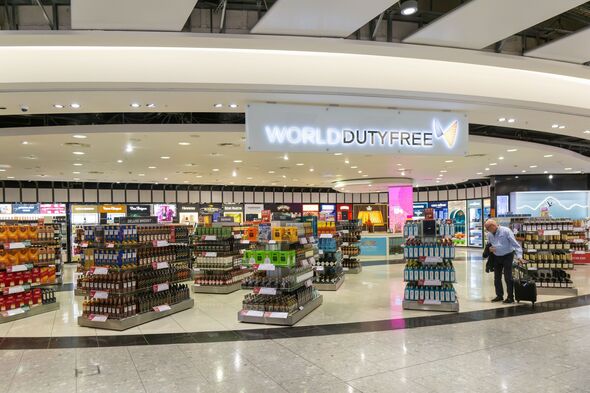

People could be hit with fines or worse if they ignore an airport rule that's easy to break if they go over their legal limit. It can catch Brits out if they round off their holiday with a splurge on a last-minute purchase of cigarettes, alcohol or luxury goods.
When travelling to or from the European Union (EU), it's important to know the rules about the duty-free allowance passengers are allowed. Failing to understand these limits could result in items being confiscated, as well as possible fines or legal action.
The duty-free allowance applies to both EU citizens and non-EU citizens, including tourists and business travellers. Since Brexit, the UK has been following the rules for non-EU citizens.
Duty-free allowance is the permitted amount, like alcohol, tobacco, and gifts, that travellers can bring into a country without paying a customs duty, value-added tax (VAT), or other taxes. Because of this, people have a strict limit to follow, or they could be seen as taking advantage.
Duty-free allowances are divided into two categories - restricted and unrestricted goods. Unrestricted goods refer to those without any special regulations or limits, like clothing, electronics, or personal items, while restricted items have specific limitations, such as alcohol, tobacco, and perfume.
What limits are in place also depend on how you are travelling back to the UK. Typically, shoppers are caught out due to the offers available in airports - but the same rules apply to those travelling by sea.
You cannot combine your allowance with other passengers either, meaning people need to be aware of their own limits. According to ETIAS Visa Europe, Brits coming back to the UK via air or sea travel have the following allowances on 'restricted' items:
Our community members are treated to special offers, promotions, and adverts from us and our partners. You can check out at any time. Read our Privacy Policy
The limits are lower for non-EU citizens travelling by rail or road. The website states that travellers should bring no more than:
ETIAS claimed that, when goods exceed the duty-free allowance, customs duty, value-added tax (VAT), and other taxes may be charged on the excess amount. The amount of duty and tax payable depends on several factors, such as the type of goods, their value, and the country of origin.
A spokesperson said: "To avoid overpaying taxes and duties, travellers should be aware of the duty-free allowances for the type of goods they are bringing into the EU. They should accurately declare all goods they are bringing in and their value.
"If unsure about the value of an item, travellers can check online or with customs officials. Additionally, travellers should keep all receipts and documentation to show the value of their goods."